
When Sport Doesn't Feel Like It's for You
One difficult experience shouldn't decide how a child feels about sport for the rest of their life.
I love sport. It's been part of my life since childhood, shaped my education and become my career.
But I also recognise that not every child experiences sport in the same way I did.
For some children, joining a club or taking part in PE is something they look forward to. For others, it can be uncomfortable, frustrating or even something they dread.
And sometimes, it doesn't take much for a child to decide that sport simply isn't for them.
Perhaps they struggle to keep up. Maybe they find the instructions difficult to follow, feel embarrassed when they make mistakes or don't feel included by the other children.
Whatever the reason, we need to take those experiences seriously.
Because when a child starts associating sport with feeling left out, unsuccessful or different, the impact can extend far beyond one session.
The moment a child decides they aren't sporty
Think about how children learn to see themselves.
They pay attention to the reactions of the adults around them. They notice who gets praised, who gets picked first and who seems to find everything easy.
They compare themselves with their friends.
And they begin to form ideas about what they're good at and where they belong.
In sport, those ideas can develop surprisingly early.
A child who repeatedly struggles in a particular activity might start saying, "I'm rubbish at this."
A child who is always one of the last to be selected might decide nobody wants them on their team.
Another might enjoy being active but become anxious about making mistakes in front of others.
Before long, the problem isn't necessarily the activity itself. It's what the child has come to believe about their place in it.
When children believe they don't belong in sport, they may stop looking for opportunities to participate.
That's why I believe the experiences we create at a young age matter so much.
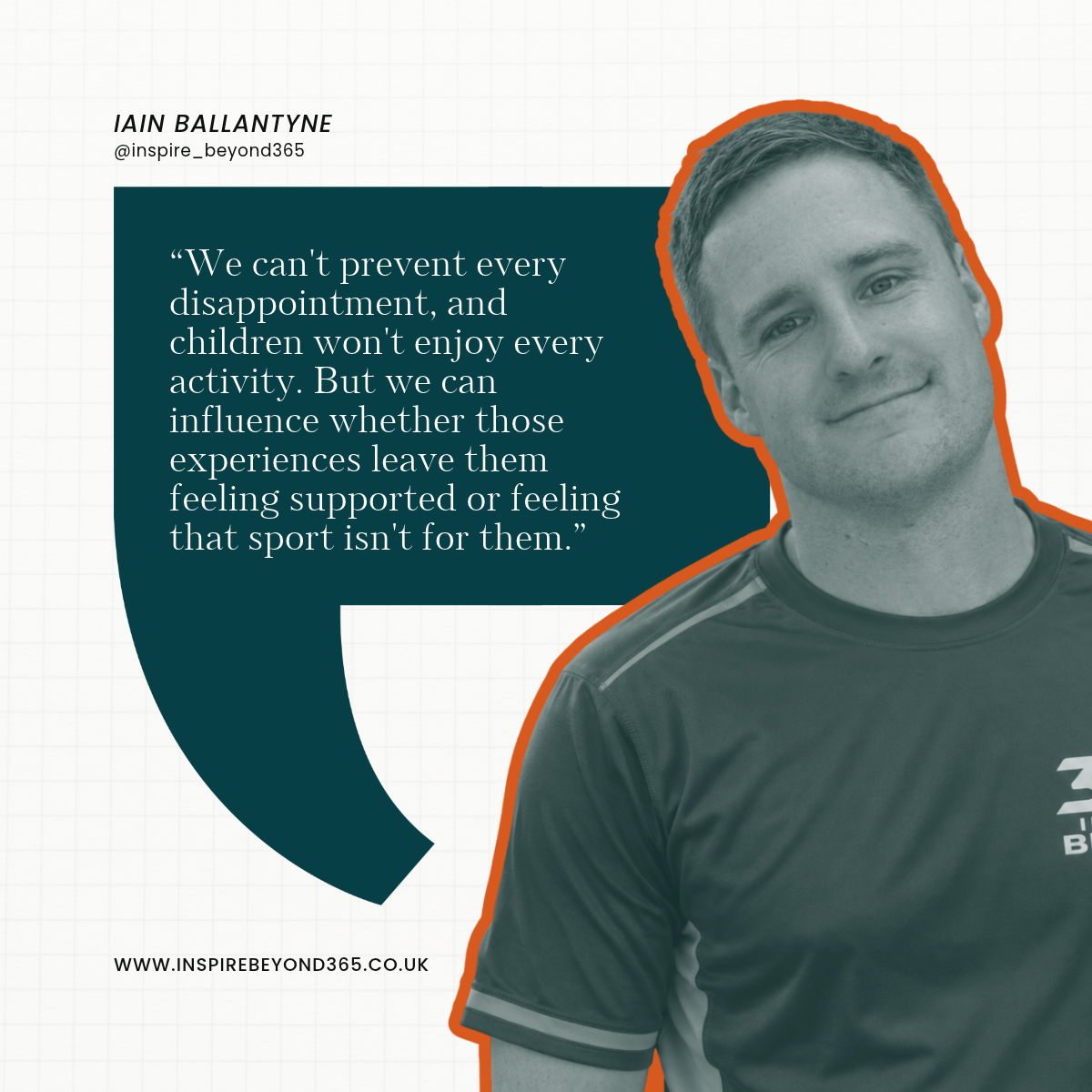
We can't prevent every disappointment, and children won't enjoy every activity. But we can influence whether those experiences leave them feeling supported or feeling that sport isn't for them.
Different children need different approaches
Having worked across different sports for more than 20 years and taught PE, I've learned that children don't all respond to the same coaching approach.
Some are comfortable being put straight into a game. Others need time to understand the activity before they're ready to join in.
Some thrive on competition. Others become so focused on the result that they struggle to enjoy the experience.
Some need a demonstration, some benefit from instructions broken into smaller steps, and others need more time to practise a skill before using it in a game.
None of this means a child is less capable of enjoying sport.
It means we need to think carefully about how we introduce activities and support children through them.
As a coach, I want to challenge children and help them develop. But I also need to recognise when the way I've structured an activity is creating a barrier rather than helping them learn.
Sometimes, a small adjustment can make a meaningful difference.
Changing the rules. Adjusting the space. Using different equipment. Giving children more time. Offering another way to take part.
The aim isn't to make every activity easy.
It's to make participation possible, meaningful and enjoyable while still giving children opportunities to develop.
Inclusion means seeing the individual
This belief is personal to me as a parent.
My son was born prematurely, is neurodivergent and has spina bifida. We've had to think carefully about how different activities work for him and recognise that certain physical demands, balance and coordination can present additional challenges.
That experience has reinforced the importance of looking at the child in front of us rather than assuming that one approach will work for everyone.
It also reminds me that a diagnosis or a challenge shouldn't define the opportunities available to a child.
We need to understand what support might help, what the child enjoys and how an activity can be adapted where appropriate.
For one child, that might mean adjusting equipment. For another, it might mean allowing additional processing time, providing clearer demonstrations or finding a different way to practise a skill.
And sometimes, the most important adjustment is simply giving a child the time and space to feel comfortable.
Inclusion isn't about pretending that everyone has identical needs.
It's about recognising differences and working to ensure those differences don't automatically become barriers to participation.
That requires us to listen, be flexible and remain willing to learn.
Why multisport can open another door
One of the reasons I'm passionate about multisport is that it can offer children different routes into being active.
If a child struggles with one activity, we shouldn't immediately assume that sport as a whole isn't right for them.
Different sports place different demands on children. They offer different challenges, environments and ways to participate.
A child who finds one team game overwhelming might enjoy learning a new skill in a smaller group.
Someone who struggles with a particular movement might find another activity that suits their current abilities and interests.
Another child might simply need a different coaching approach or a more supportive environment.
Multisport doesn't guarantee that every child will find an activity they love, but it gives us more opportunities to explore what might work.
It encourages us to keep asking questions rather than closing the door too early.
And that's important because children deserve the chance to discover their interests without being defined by one difficult experience.
We need to think about the experience, not just the activity
When we talk about getting children involved in sport, it's easy to focus on what's being delivered.
Which sport are they playing? What skills are they learning? How many children are attending?
Those things matter, but I'd also encourage us to think about how children feel when they're there.
Do they feel welcome?
Do they understand what's expected of them?
Are they given opportunities to contribute?
Can they make mistakes without feeling embarrassed?
Do they feel that the coach notices them as an individual?
These questions can tell us a great deal about whether we're creating an environment where children want to return.
A session doesn't have to be perfect, and every child will have different preferences. But children should have opportunities to participate without feeling that they must prove their worth before they belong.
We need to celebrate effort, curiosity, cooperation and progress, not just the children who perform best.
Changing the experience can change the story
I don't expect every child to become a lifelong athlete.
That's not the point.
I want children to have positive experiences of movement and sport, and the opportunity to discover what participation can offer them.
For some, that will mean joining a club and developing a real competitive passion.
For others, it might mean enjoying a range of activities, building friendships or finding a way to stay active that works for them.
And for a child who has previously felt that sport wasn't a place for them, a positive experience might be the beginning of a very different relationship with being active.
At Inspire Beyond 365, I want to help create those opportunities.
I want children to be supported as individuals, encouraged to try and given room to develop without being compared constantly with others.
Because we may not know what a child will go on to achieve.
But we can make sure that one difficult experience doesn't have to be the end of their sporting story.
Every child deserves the chance to find a way into sport that works for them. And sometimes, all it takes is an environment where they finally feel they belong.
#InspireBeyond365 #InclusiveSport #Multisport #SportForAll #YouthSport #EveryChildCan